What is the clutch pressure plate? What is the function?

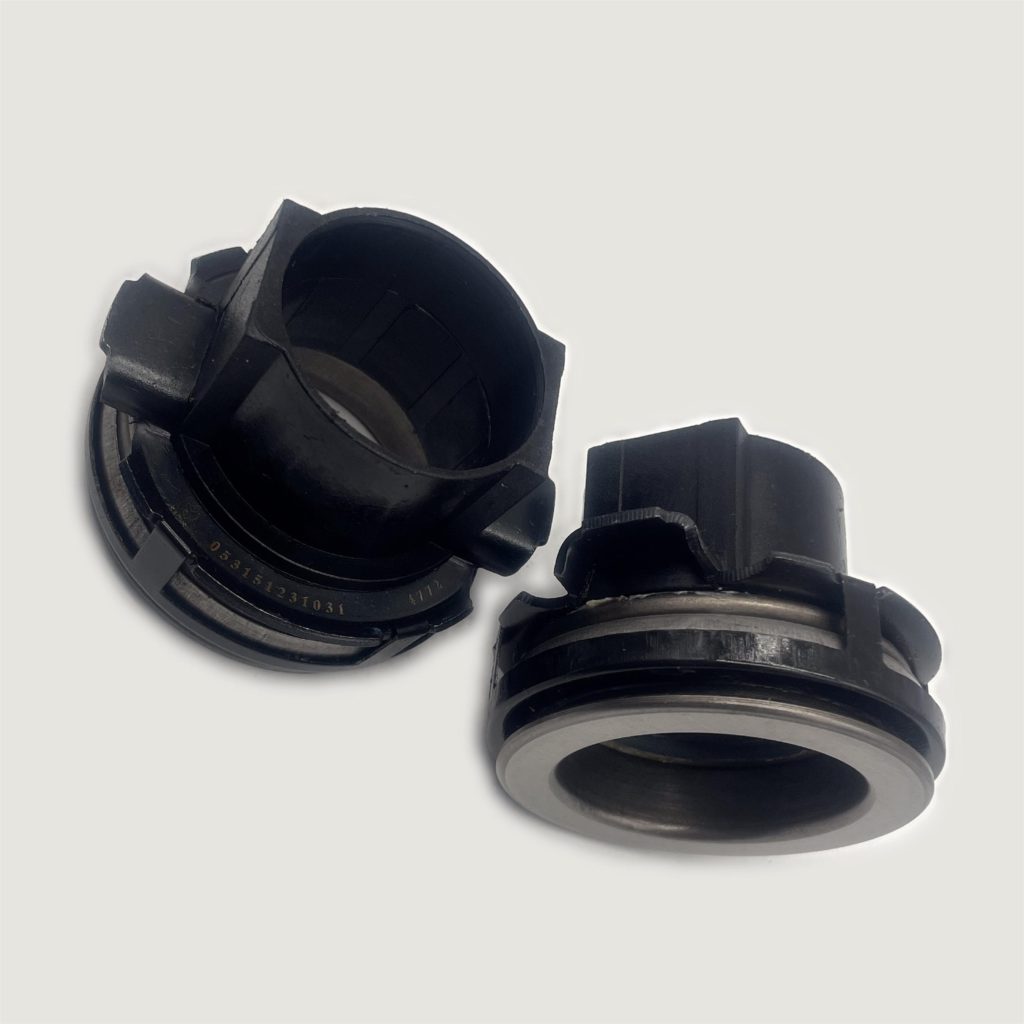
Clutch pressure plate is an important component of the clutch, and its function plays a crucial role in vehicle driving safety. As one of the main parts of the clutch assembly, the clutch pressure plate transmits and cuts off the engine’s power transmission through a linkage mechanism according to the driver’s intention. It works in conjunction with the clutch disc to ensure smooth vehicle starting, seamless gear shifting, and prevention of engine overload.

Clutch pressure plate

Clutch pressure plate braking widely adopts a spring-loaded friction clutch (referred to as a friction clutch). The torque generated by the engine is transmitted to the driven disc through the frictional force between the flywheel, pressure plate, and the contact surface of the driven disc. When the driver depresses the clutch pedal, the large end of the diaphragm spring drives the pressure plate to move backward through the transmission of mechanical parts, separating the driven part from the driving part at this time.

Clutch pressure plate is equipped with friction plates, similar to the brake pads on wheels, which are made of wear-resistant asbestos and copper wires. The friction plates on the pressure plate also have a permissible minimum thickness. After long driving distances, the friction plates on the pressure plate need to be replaced. In the past, friction plates could be replaced with purchased spare parts, but now pre-assembled pressure plate sub-assemblies with friction plates are available, eliminating the need to replace friction plates separately—simply replace the clutch pressure plate. To reduce wear and tear on the clutch disc, there is a correct way to use the clutch pedal: avoid keeping the clutch pedal half-depressed. This places the clutch disc in a semi-engaged state, where the flywheel and pressure plate are in a frictional state. When the clutch pedal is fully depressed, the flywheel and clutch pressure plate are completely separated with no friction between them. When the clutch pedal is fully released, the flywheel and clutch pressure plate are fully engaged, where although there is some friction, it is essentially minimal. Therefore, the clutch pedal should not be kept in a half-depressed state.

How to inspect and repair the clutch pressure plate? The inspection methods and requirements for the clutch pressure plate are as follows:

  1. The flatness error of the clutch pressure plate working surface should not exceed 0.12mm, and the depth of grooves on it should not exceed 0.50mm. If too deep, it should be ground on a surface grinder, but the grinding thickness should not exceed 1mm. If the grinding thickness has reached the limit but a small amount of the surface remains unground, it can still be used as long as the unground area does not exceed 10% and is evenly distributed.
  2. After grinding, the pressure plate should undergo a balance test, with an unbalance error of no more than 50g·cm. If the error exceeds the limit, the drilling method can be used to drill holes in appropriate parts of the pressure plate to meet the balance requirement.
  3. For the middle pressure plate of a dual-disc clutch, the clearance between the transmission pin hole and the transmission pin should not exceed 1mm. The transmission pin can be reinstalled at a 90° rotation. Otherwise, it should be repaired or replaced.
  4. If the pressure plate shows severe aging, cracking, and the wear groove depth exceeds 0.50mm, it should be replaced with a new part.

Have any other questions? Welcome to contact us!

Characteristics, Differences and Applications of Common Bearings

Bearings are crucial components in mechanical equipment. Their main function is to support the mechanical rotating body, thereby reducing the coefficient of mechanical load friction during equipment transmission.

Bearings are classified according to the direction of load or nominal contact angle into radial bearings and thrust bearings.

According to the type of rolling elements, they are divided into ball bearings and roller bearings.

According to their self-aligning capability, they are classified into self-aligning bearings and non-self-aligning bearings (rigid bearings).

According to the number of rows of rolling elements, they are divided into single-row bearings, double-row bearings and multi-row bearings.

According to whether the components can be separated, they are divided into separable bearings and non-separable bearings.

In addition, there are classifications according to structural shape and size.

This article mainly shares the characteristics, differences and corresponding applications of 14 common bearings.

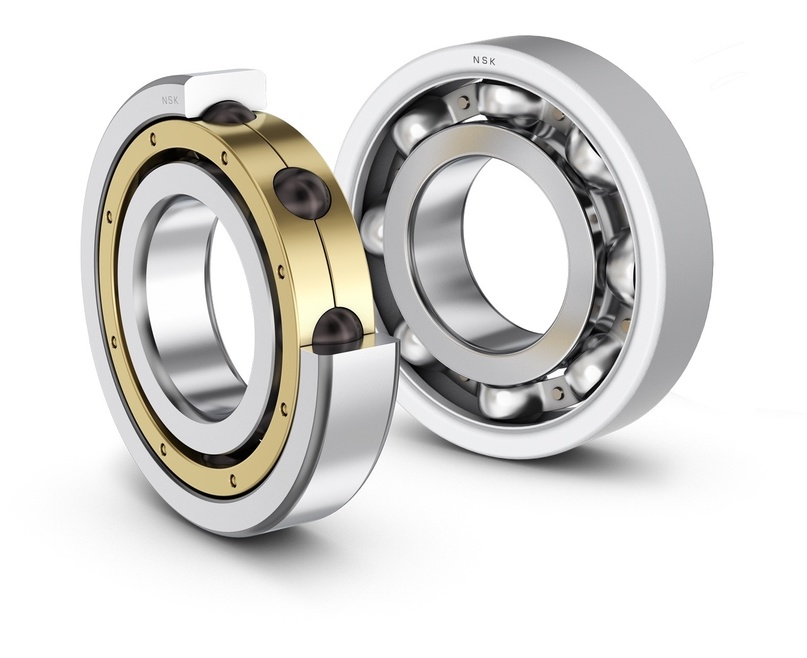
1. Angular Contact Ball Bearings

There is a contact angle between the ring and the ball. The standard contact angles are 15°, 30° and 40°. The larger the contact angle, the greater the axial load capacity, and the smaller the contact angle, the more conducive to high-speed rotation. Single-row bearings can withstand radial loads and unidirectional axial loads. Structurally, two single-row angular contact ball bearings combined on the back share the inner and outer rings, and can withstand radial loads and bidirectional axial loads.

Angular Contact Ball Bearings

Main Applications:

  • Single-row: Machine tool spindles, high-frequency motors, gas turbines, centrifugal separators, front wheels of small cars, differential pinion shafts.
  • Double-row: Oil pumps, Roots blowers, air compressors, various transmissions, fuel injection pumps, printing machinery.

2. Self-aligning Ball Bearings

With double rows of steel balls and an inner spherical outer ring raceway, they can automatically adjust for shaft misalignment caused by deflection or misalignment of the shaft or housing. Tapered bore bearings can be easily mounted on the shaft using fasteners, mainly withstand radial loads.

 Self-aligning Ball Bearings

Main Applications: Woodworking machinery, textile machinery drive shafts, vertical mounted self-aligning bearings.

3. Self-aligning Roller Bearings

This type of bearing has spherical rollers between the spherical raceway outer ring and the double raceway inner ring. According to different internal structures, it is divided into four types: R, RH, RHA and SR. Since the arc center of the outer ring raceway coincides with the bearing center, it has self-aligning performance, so it can automatically adjust for shaft misalignment caused by deflection or misalignment of the shaft or housing. It can withstand radial loads and bidirectional axial loads.

Self-aligning Roller Bearings

Main Applications: Paper machinery, reduction devices, railway vehicle axles, rolling mill gearbox seats, rolling mill roller paths, crushers, vibrating screens, printing machinery, woodworking machinery, various industrial reducers, vertical mounted self-aligning bearings.

4. Thrust Self-aligning Roller Bearings

The spherical rollers in this type of bearing are arranged obliquely. Due to the spherical shape of the raceway surface of the ring, it has self-aligning performance, so the shaft is allowed to have a certain degree of inclination. The axial load capacity is very large, and it can also withstand a certain radial load while withstand axial load. Generally, oil lubrication is used when in use.

Thrust Self-aligning Roller Bearings

Main Applications: Hydraulic generators, vertical motors, ship propeller shafts, rolling mill rolling screw reducers, tower cranes, coal mills, extruders, forming machines.

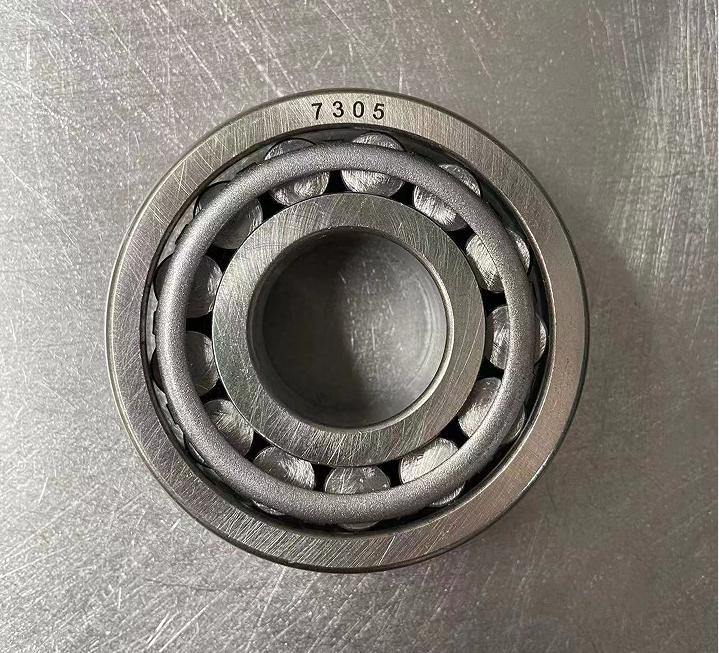
5. Tapered Roller Bearings

This type of bearing is equipped with conical rollers, which are guided by the large rib of the inner ring. The design makes the vertices of the conical surfaces of the inner ring raceway, outer ring raceway and roller rolling surface intersect at a point on the bearing centerline. Single-row bearings can withstand radial loads and unidirectional axial loads, while double-row bearings can withstand radial loads and bidirectional axial loads, and are suitable for withstand heavy loads and impact loads.

Tapered Roller Bearings

Main Applications: Automobiles: front wheels, rear wheels, transmissions, differential pinion shafts. Machine tool spindles, construction machinery, large agricultural machinery, railway vehicle gear reduction devices, rolling mill rolls and reduction devices.

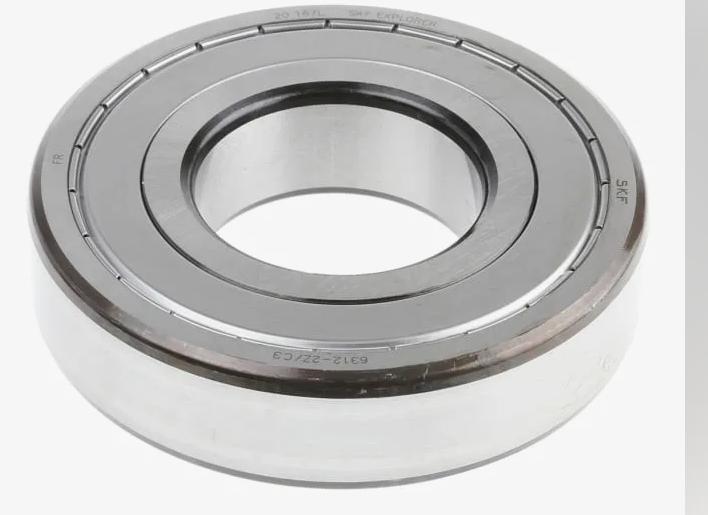
6. Deep Groove Ball Bearings

Structurally, each ring of the deep groove ball bearing has a continuous groove-type raceway with a cross-section approximately one-third of the equatorial circumference of the ball. Deep groove ball bearings are mainly used to withstand radial loads, and can also withstand a certain axial load.

When the radial clearance of the bearing is increased, it has the characteristics of angular contact ball bearings and can withstand bidirectional alternating axial loads. Compared with other types of bearings of the same size, this type of bearing has a small friction coefficient, high limiting speed and high precision, and is the preferred bearing type for users when selecting.

Deep Groove Ball Bearings

Main Applications: Automobiles, tractors, machine tools, motors, water pumps, agricultural machinery, textile machinery, etc.

7. Thrust Ball Bearings

They are composed of washer-shaped raceway rings with raceways and ball and cage assemblies. The raceway ring that fits with the shaft is called the shaft ring, and the raceway ring that fits with the housing is called the seat ring. For double-directional bearings, the middle ring is fitted with the shaft. Single-directional bearings can withstand unidirectional axial loads, and double-directional bearings can withstand bidirectional axial loads (both cannot withstand radial loads).

Thrust Ball Bearings

Main Applications: Automobile steering knuckles, machine tool spindles.

8. Thrust Roller Bearings

Thrust roller bearings are used to withstand axial loads as the main axial-radial combined loads, but the radial load shall not exceed 55% of the axial load. Compared with other thrust roller bearings, this type of bearing has a lower friction coefficient, higher speed and self-aligning capability. The rollers of type 29000 bearings are asymmetric spherical rollers, which can reduce the relative sliding between the rollers and the raceway during operation, and the rollers are long, large in diameter and many in number, so the load capacity is large. Generally, oil lubrication is adopted, and grease lubrication can be used in individual low-speed cases.

Thrust Roller Bearings

Main Applications: Hydraulic generators, crane hooks.

9. Cylindrical Roller Bearings

The rollers of cylindrical roller bearings are usually guided by the two ribs of one bearing ring. The cage, rollers and guide ring form an assembly that can be separated from the other bearing ring, belonging to separable bearings.

This type of bearing is relatively convenient to install and disassemble, especially when the inner and outer rings and the shaft and housing are required to have an interference fit. This type of bearing is generally only used to withstand radial loads. Only single-row bearings with ribs on both the inner and outer rings can withstand small constant axial loads or large intermittent axial loads.

Cylindrical Roller Bearings

Main Applications: Large motors, machine tool spindles, axle boxes, diesel engine crankshafts, automobile and tractor gearboxes, etc.

10. Four-point Contact Ball Bearings

They can withstand radial loads and bidirectional axial loads. A single bearing can replace the front combination or back combination of angular contact ball bearings, and is suitable for withstand pure axial loads or composite loads with a large axial load component. When this type of bearing withstand axial loads in any direction, one of the contact angles can be formed, so the ring and the ball always contact at two points on any contact line.

Four-point Contact Ball Bearings

Main Applications: Aircraft jet engines, gas turbines.

11. Thrust Cylindrical Roller Bearings

They are composed of washer-shaped raceway rings (shaft ring, seat ring) and cylindrical roller and cage assemblies. The cylindrical rollers are convexly machined, so the pressure distribution between the rollers and the raceway surface is uniform, and they can withstand unidirectional axial loads. The axial load capacity is large, and the axial rigidity is also strong.

 Thrust Cylindrical Roller Bearings

Main Applications: Oil drilling rigs, iron and steel making machinery.

12. Thrust Needle Roller Bearings

The separable bearing is composed of a raceway ring and a needle roller and cage assembly, and can be arbitrarily combined with a thin raceway ring processed by stamping or a thick raceway ring processed by cutting. The non-separable bearing is an integral bearing composed of a raceway ring processed by precision stamping and a needle roller and cage assembly. It can withstand unidirectional axial loads. This type of bearing occupies a small space, which is conducive to the compact design of the machine. Most of them only use the needle roller and cage assembly, and use the installation surface of the shaft and the housing as the raceway surface.

Thrust Needle Roller Bearings

Main Applications: Transmission devices of automobiles, cultivators, machine tools, etc.

13. Thrust Tapered Roller Bearings

This type of bearing is equipped with conical rollers (the large end is spherical), and the rollers are accurately guided by the ribs of the raceway ring (shaft ring, seat ring). The design makes the vertices of the conical surfaces of the shaft ring and seat ring raceways and the roller rolling surface intersect at a point on the bearing centerline. Single-directional bearings can withstand unidirectional axial loads, and double-directional bearings can withstand bidirectional axial loads.

Thrust Tapered Roller Bearings

Main Applications:

  • Unidirectional: Crane hooks, oil drilling rig swivels.
  • Bidirectional: Rolling mill rolls.

14. Insert Ball Bearings with Housings

Insert ball bearings with housings are composed of sealed insert ball bearings on both sides and cast (or steel plate stamped) bearing housings. The internal structure of the insert ball bearing is the same as that of the deep groove ball bearing, but the inner ring of this type of bearing is wider than the outer ring. The outer ring has a spherical outer surface that matches the concave spherical surface of the bearing housing to achieve automatic alignment.

Insert Ball Bearings with Housings

Main Applications: Mining, metallurgy, agriculture, chemical industry, textile, printing and dyeing, conveying machinery, etc.

What are the symptoms of a broken steering Universal shaft?

Have you ever noticed a strange noise when turning your steering wheel? That unsettling creak or clunk could be coming from your steering universal joint—a small but crucial component in your vehicle’s steering system. In this article, we’ll explore what the steering universal joint does, why it might start making noise, the symptoms of a broken steering Universal shaft, and tips to extend its lifespan.

Whether you’re a DIY enthusiast or just want to be informed before visiting a mechanic, this guide will help you better understand the health of your steering system.

What is a Steering Universal Joint?

The steering universal joint, also known as the U-joint, is a part of the steering shaft that allows the shaft to bend and flex while transmitting the rotational motion from your steering wheel to the steering gearbox or rack. In simpler terms, it enables smooth and flexible turning of your vehicle—even when the steering column isn’t perfectly aligned with the steering gear.

It works similarly to the joints in your arms and legs, allowing a wide range of movement without compromising strength or stability. Without the steering universal joint, turning your car would feel stiff and unnatural, or might not work at all.

Common Causes of Steering Universal Joint Noise

If you’re hearing clicking, clunking, or grinding noises when turning the wheel, your steering universal joint may be to blame. Here are the most common causes behind those troubling sounds:

1. Lack of Lubrication

Over time, the U-joint may lose lubrication. This leads to increased friction, which in turn causes squeaking or grinding sounds. Eventually, the joint can seize up entirely.

2. Wear and Tear

Like all mechanical components, the steering universal joint wears down with use. Rust, moisture, dirt, and road salt can accelerate this process, especially if the joint is not properly sealed.

3. Corrosion

Exposure to water and road grime can cause rust to form on the U-joint, making it stiff or noisy. Corrosion is especially common in vehicles frequently driven in wet or snowy climates.

4. Loose or Worn Components

If other steering system components like the intermediate shaft or column bushings are worn or loose, they can contribute to or amplify the noise coming from the U-joint area.

Symptoms of a Bad Steering Universal Joint

Recognizing the signs of a failing steering universal joint early can prevent further damage and ensure your safety on the road. Here are the top warning signs to watch for:

1. Unusual Noises When Turning

One of the first and most obvious symptoms is a clunking or clicking noise when you turn the steering wheel. This usually happens when the U-joint becomes loose or dry.

2. Stiff Steering Wheel

If the steering becomes harder than usual, it might be due to a failing U-joint. As the joint wears or seizes, it resists movement, requiring more effort to turn the wheel.

3. Vibration While Driving

You might feel unusual vibrations through the steering wheel, especially at certain speeds. This often results from a misaligned or unbalanced U-joint.

4. Steering Play or Inconsistency

A worn U-joint can cause excessive play in the steering system, making the vehicle respond unpredictably to steering input.

5. Complete Steering Failure (In Extreme Cases)

Though rare, a completely failed steering universal joint could cause a loss of steering control, which can be extremely dangerous.

How to Diagnose a Steering Universal Joint Problem

Wondering if your U-joint is the culprit? Here’s a simple way to check:

  1. Listen While Turning
    Start your vehicle and turn the steering wheel left and right while parked. Pay attention to any unusual noises—clunking, popping, or grinding.
  2. Feel for Resistance or Play
    Does the steering feel stiff or jerky? Is there excessive play or looseness when you try to turn?
  3. Inspect the Joint Visually
    If accessible, examine the steering universal joint. Look for signs of rust, corrosion, or physical damage. Move the shaft by hand (engine off) to feel for any looseness or stiffness.

If you’re unsure or suspect a problem, it’s best to consult a professional mechanic for a thorough inspection.

How to Maintain Your Steering Universal Joint

To keep your steering system in top shape and extend the life of the U-joint, follow these simple maintenance tips:

1. Regular Lubrication

If your vehicle’s U-joint has grease fittings, apply grease regularly according to the manufacturer’s recommendations. This reduces friction and wear.

2. Avoid Turning the Wheel to the Lock Position

Repeatedly turning your steering wheel all the way to the lock can stress the U-joint and other steering components. Try to avoid full-lock turns unless necessary.

3. Check Steering Fluid Levels

While not directly affecting the U-joint, low or dirty power steering fluid can cause other steering issues that indirectly strain the joint.

4. Keep the Underbody Clean

After driving in muddy or snowy conditions, rinse the underbody of your vehicle. This helps prevent buildup of corrosive materials like road salt that can damage the steering universal joint.

5. Get Periodic Inspections

As part of your vehicle’s routine service, ask your mechanic to inspect the steering shaft and U-joints, especially if you’re experiencing any symptoms.

Why the Steering Universal Joint Should Never Be Ignored

The steering universal joint may be small, but it plays a huge role in vehicle safety and performance. Ignoring symptoms of wear or damage can lead to serious steering problems, possibly even failure. Replacing a failing U-joint is far less expensive than dealing with the consequences of an accident or more extensive steering repairs.

If you’re hearing unusual noises, experiencing stiffness, or noticing anything unusual about how your vehicle steers, don’t delay—get it checked immediately.

Final Thoughts

The steering universal joint is an essential component that ensures smooth and safe steering performance. Understanding the symptoms of a failing U-joint and taking preventive maintenance steps can go a long way in ensuring a safe driving experience.

If you found this article helpful, feel free to share it with others. And if you have any questions or personal experiences with steering issues, drop a comment below—we’d love to hear from you!

Congratulations on the successful conclusion of the MIMS Automobility Moscow Exhibition

Thanks for all customers & friends visiting and support ! The 4-day MIMS Automobility Moscow 2025 exhibition has come to a successful conclusion. This exhibition is an important platform for us to show our products and strengths. We are satisfied with the results achieved and the valuable connections established with partners and customers.

Auto Bearing Supplier

At the exhibition, our booth design was full of industrial beauty, focusing on a series of high-precision, high-performance bearing products. From deep groove ball bearings to tapered roller bearings, each product reflects our commitment to advanced technology and craftsmanship. Our professional technical team provided visitors with detailed and easy-to-understand explanations, clearly explaining the advantages of our bearings and demonstrating our deep expertise and production capabilities in the bearing field.

Auto Bearing Supplier

At the booth, the negotiation atmosphere was lively and we obtained a number of cooperation intentions, which exceeded our expectations. These achievements are the result of our team’s careful preparation and hard work, and also reflect our customers’ trust in the quality and reliability of our bearing products.

We sincerely thank every team member who contributed to the success of the exhibition, as well as all customers who trust us. In the future, we will continue to enhance our production strength, produce more high-quality bearing products with greater enthusiasm, and work hand in hand with all partners to open up broader opportunities.

Auto Bearing Supplier

On the First Day of MIMS Automobility Moscow 2025 Exhibition, the Scene Is Extremely Hot!

Welcome to come to our booth!

If you’re planning to visit, please let us know in advance — we’ll arrange a personal meeting and prepare a small gift just for you.

Don’t miss this chance to connect, explore our latest products, and discuss how we can support your business!

Booth No.: Hall 2.4, D221

Date: May 12-15, 2025

Venue: Moscow International Convention and Exhibition Center

MIMS Automobility Moscow

The following is the booth location guide and photos, waiting for your coming!

MIMS Automobility Moscow